
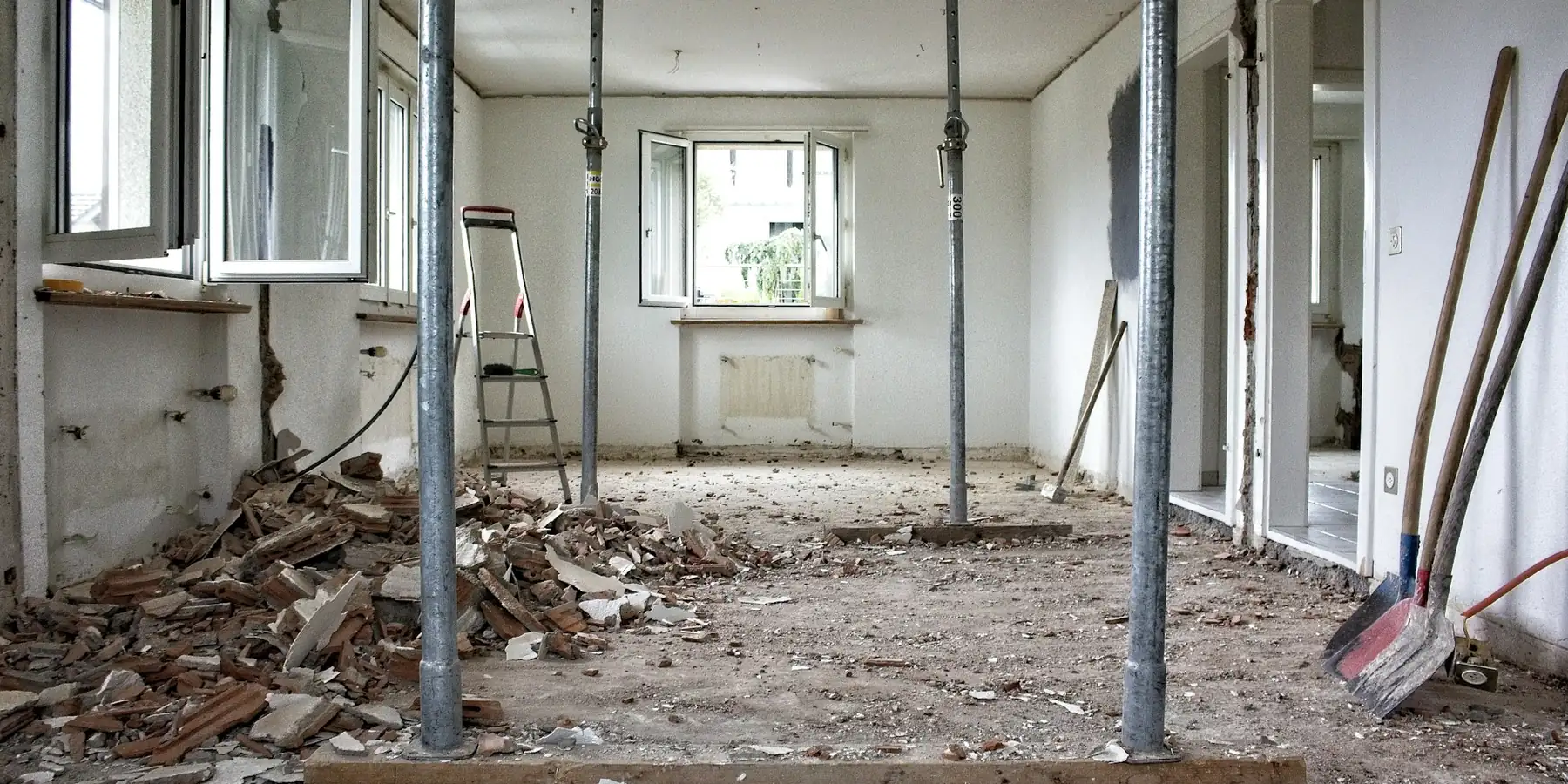
Remodeling and Painting Services in South San Francisco
Quin Building Solutions handles remodeling, repair, and painting for homes and rental properties across South San Francisco and the northern Peninsula. Some projects are a single bathroom and some are a whole interior, and every one of them is planned, priced, and supervised by the same licensed general contractor.
Below is what we do, what is included, and the questions people ask most often before they commit.
Kitchen and Bathroom Remodeling
Most people put off a remodel far longer than they meant to, and money is rarely the only reason. It is the stories they have heard. The kitchen that sat torn apart for four months. The neighbor who paid a deposit and then could not get a call returned. The bathroom that came in eleven thousand over the bid because nobody wrote down what would happen if the subfloor was rotten.
A licensed general building contractor exists to solve exactly that. Class B covers projects that involve several unrelated trades at once, which means one contractor plans the sequence, runs the demolition, the framing, the drywall, the finish carpentry, the tile, and the paint, and brings in licensed specialists for plumbing and electrical where the law requires them. You deal with one scope, one schedule, and one person who is accountable when something is not right.
Kitchen remodeling covers cabinet installation, countertops, backsplash and tile work, flooring, lighting layout, trim and finish carpentry, and the final details that decide whether the room reads as genuinely new or as something that got patched. Kitchens are the most disruptive room in a house to remodel, so the sequence matters as much as the craftsmanship, and we plan it so you are without a functioning kitchen for the shortest window possible.
Bathroom remodeling covers tile and waterproofing, vanity and fixture installation, flooring, drywall repair, ventilation, and moisture-rated finishes. Waterproofing is where cheap bathroom remodels fail, and it fails invisibly, three or four years later, inside the wall. It is the least glamorous line on the estimate and the one worth paying attention to.
Whole interior updates cover flooring throughout, new baseboards, casings and doors, drywall repair and texture matching, closet and storage build-outs, and a full repaint to pull the house together. This is the most cost-effective project we do for homeowners preparing to sell or for families who bought a house on the Peninsula that was last updated in the nineties.
Before anything starts you get a written scope listing what is included, what is excluded, how long it takes, and what conditions would change the price.
Cost depends on the size of the room, whether plumbing or electrical is being relocated, and above all on the materials you choose, since finish selections can swing a bathroom budget by a factor of three without changing a single hour of labor. Rather than quote a number that means nothing without seeing your space, we walk the project and give you a written figure for your actual house.
Yes. When a project requires a permit we handle the application and coordinate inspections with the city. Work that moves plumbing, alters electrical, or affects anything structural nearly always requires one, and skipping it creates a problem that surfaces years later when the house is sold.
Interior Painting
Any room can be painted in a day by almost anyone. Whether it still looks right in five years is decided entirely by what happened before the first coat, and all of that becomes invisible the moment the wall is finished.
We patch the nail holes and the anchor holes, cut out and properly repair cracked drywall instead of skimming over it, sand down the ridges left by whoever painted last, caulk the gaps where trim meets wall, and prime the areas that will bleed through if they are not sealed first. Only then does paint go on, and it lays down evenly because the surface underneath it is genuinely flat.
What we paint. Walls and ceilings, baseboards, crown molding, window and door casings, interior doors, stairwells and railings, closets, and kitchen cabinets where the existing boxes are solid enough to be worth refinishing.
What we protect. Furniture gets moved and covered, floors get papered or dropped, hardware and fixtures get removed or masked, and the work area gets cleaned at the end of each day rather than all at once on the last one. Living in a house during an interior paint job is unpleasant enough without a week of accumulated mess.
Older homes across South San Francisco, Daly City, and San Bruno often carry lead-based paint, since anything built before 1978 is a candidate. Disturbing it during prep is regulated for good reason, and we will tell you at the walkthrough if your home falls into that category and what it means for the work.
Interior painting is priced by the surface area being coated and, more than anything, by the condition of what is underneath. A recently painted room in good shape is straightforward. A room with cracked plaster, water damage, or three layers of failing old paint takes far more preparation, and the preparation is where the hours actually go.
Often yes, and it is one of the biggest visual changes available for the money when the cabinet boxes are structurally sound. Cabinet refinishing needs proper degreasing, sanding, priming, and a hard-wearing finish, since cabinet doors get touched constantly and ordinary wall paint will not survive it.
Exterior Painting and Wood Repair
Exterior work near this coast is a different job than exterior work twenty miles inland, and treating them the same is how houses end up peeling eighteen months after being painted. Fog comes through most mornings, salt sits in the air year round, and the afternoon sun hits west-facing walls in San Bruno and Pacifica hard enough to break down anything cheap.
The work starts with washing so the coating has a clean surface to bond to. Everything already failing gets scraped and sanded, because paint applied over loose paint fails exactly as fast as the layer beneath it. Rotted or damaged wood gets cut out and replaced, joints and trim get caulked and sealed, bare wood gets primed, and the finish coat goes on last.
Typically included. Siding, trim, fascia and eaves, window and door frames, garage doors, railings, fences and gates, and stucco patching where it has cracked or spalled.
Wood repair. Rotted siding boards, damaged fascia and trim, window sills, and the finish carpentry that has to happen before paint is worth applying at all. Painting over rot hides it for one season and costs three times as much to fix afterward.
Exterior schedules on the Peninsula depend on weather more than anything else. We plan around the forecast and will tell you honestly when a stretch of fog means waiting a few days, because a coating applied on the wrong morning does not cure properly and you are the one who lives with the result.
Coastal exposure shortens the cycle compared to inland homes. West-facing and weather-facing walls almost always fail first, and it is common for one elevation to need attention while the rest of the house is still fine. Catching it at that stage is dramatically cheaper than waiting until bare wood is exposed and rot has started.
Yes, and we consider it part of the job rather than an upsell. Rotted wood found during preparation gets cut out and replaced before any coating goes on, and you are told about it and shown it before the work is done.
Rental Turnovers and Make Ready
If you own rental property on the Peninsula, the expensive part of a turnover is not the paint. It is the two extra weeks the unit sits dark while you wait for someone to come look at it, then wait for the quote, then wait for a start date, all while the mortgage keeps arriving on schedule.
We handle make ready work for owners of single family rentals, duplexes, condos, in-law units, and small buildings. That normally means fresh paint on walls, ceilings, trim, and doors, patching for the holes and dents that appear the moment furniture leaves, drywall repair where a tenant was careless, cabinet and closet touch-ups, minor fixture and hardware replacement, and flooring repair when it makes sense to handle before the next lease.
What rental owners tell us matters most is simply knowing where things stand. We walk the unit, give you a number, tell you which days we need it, and let you know the same day if something turns up that changes the scope. The invoice matches the estimate, which ought to be unremarkable and somehow is not.
Good fit for. Single family rentals, duplexes, condos, in-law units, ADUs, and homes being prepared to list for sale.
A straightforward paint and patch turnover on a small unit is usually a matter of days rather than weeks. Flooring, cabinet work, or significant repairs extend that. Tell us your listing date at the walkthrough and we will tell you honestly whether it is reachable, rather than agreeing to it and discovering the problem halfway through.
Yes. Pre-listing work is some of the highest return spending a seller can do, and it usually comes down to paint, flooring, and small repairs rather than anything structural. We will tell you which items are worth the money before a sale and which ones the next owner will change anyway.
Small Commercial Projects
Commercial work carries a problem residential work does not, and it usually has nothing to do with construction. Your business has to keep operating, customers have to keep coming through the door, and no part of the space can be unavailable for three days without it costing real money.
We take on small commercial interiors: offices, storefronts, salons, small retail, waiting areas, hallways, and common areas. Before the first day you get a written scope and a day-by-day plan showing which areas are out of service when, so you can tell your staff and your customers what to expect. When evening or weekend scheduling is the only arrangement that works, we build the plan around it.
Our projects are sized for a single licensed contractor rather than a large operation, which makes this a good fit for spaces of a few thousand square feet and under. If your project is bigger, tell us anyway and we will be straight with you about whether we are the right choice.
Yes, when the project calls for it. Evening and weekend scheduling costs more in labor but usually costs far less than closing a storefront for several days, and for most small businesses the math favors it clearly.
Not sure what your project needs?
Describe the problem in plain language and we will tell you what is actually involved, roughly what it costs, and how long it takes. If it is not something we should be handling, we will say so, because sending you to the right person is better for everyone than taking a job we should not take.